Global Engagement: Empowering Employees with 5 Service Values Worldwide
Role
Product Designer
Sector
Gamification
Project Time
8 Months
Project Background
In 2022, ICL embarked on a mission to instill the organization’s 5 service values among its 5,000 employees spread across the globe. The project was approved on February 21, with a targeted completion date of December 21, aligning with the upcoming new year.
A cross-functional team consisting of development, design, and content experts was assembled to execute the project. As a key member of this team, I played the role of product design, collaborating closely with ICL’s lead designer, Play-it’s project manager, and ICL’s think tank.
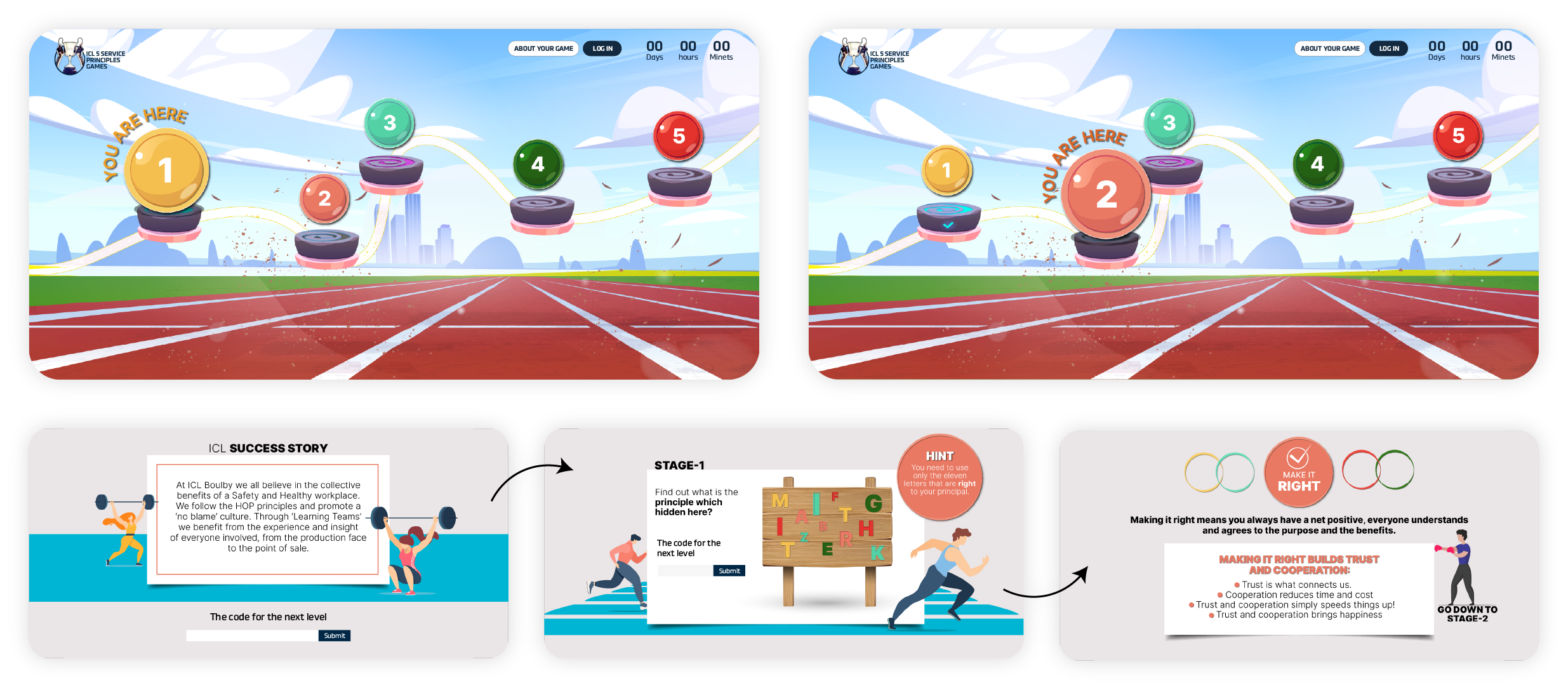
The project’s initial approach focused on creating engaging virtual games representing each of the service values. These games were designed to foster healthy competition among all the company’s employees worldwide.

the development process
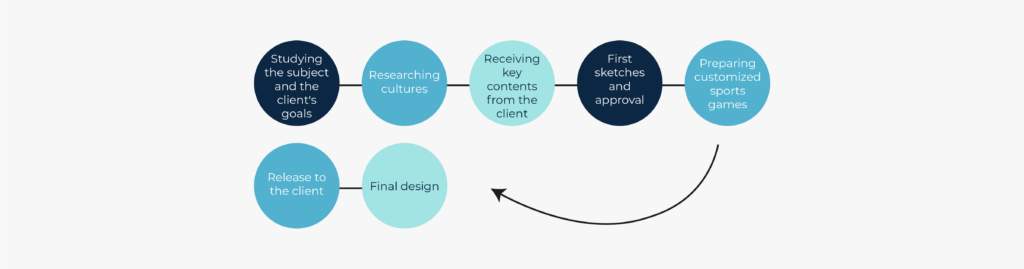
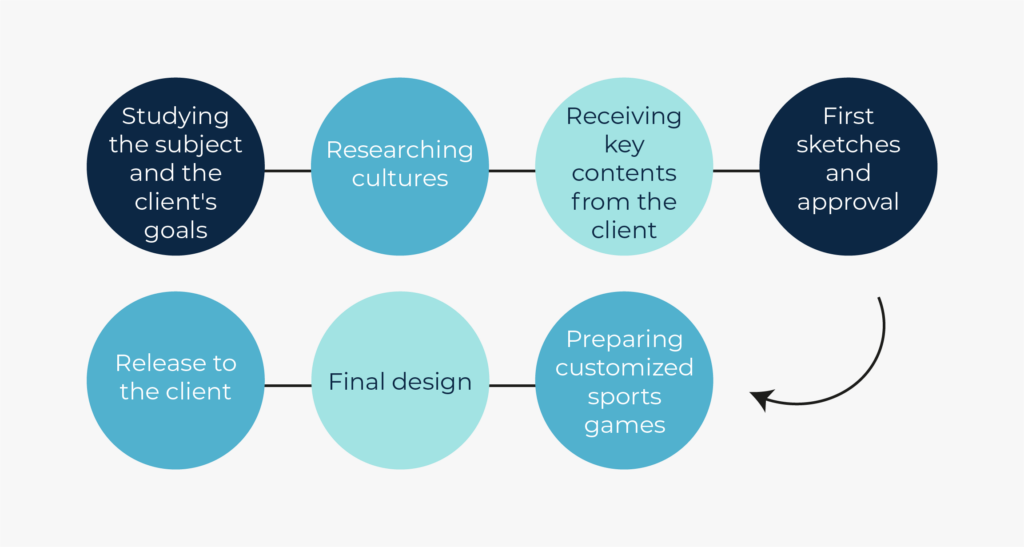
The development process for the virtual social-organizational-team platform involved several key stages to ensure its successful implementation.
Here’s a breakdown of the steps taken:
the challenges
The project indeed faced several challenges during its execution:
Tight and Demanding Schedule: The project spanned 8 intense months with strict deadlines to meet. This required meticulous planning, efficient task allocation, and continuous progress tracking to ensure that all aspects of the platform were developed and tested within the allotted time.
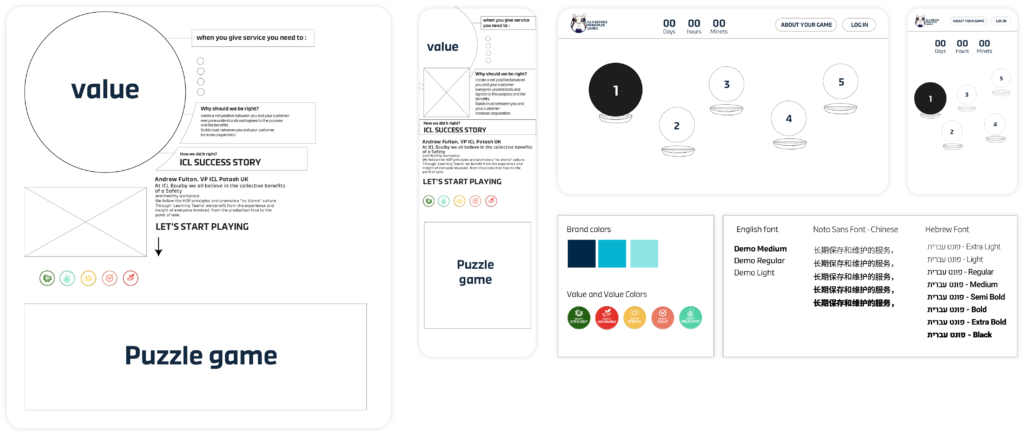
Multilingual Interface Design: Designing the interface for 8 different languages presented a significant challenge. Adapting the platform to various languages while maintaining consistency in the user experience required careful consideration of cultural nuances, text expansion issues, and the overall readability in each language.
Complexity of Chinese Interface: Converting the interface into Chinese posed a specific challenge due to the nature of the language. Chinese characters have a higher density of meaning compared to English, which required thoughtful adjustments to the layout and design to accommodate the characters without compromising clarity and functionality.
Transforming “Massive” Content into a Game: Converting substantial content into an engaging game demanded creative thinking and meticulous attention to detail. Balancing educational content with gamification elements while ensuring simplicity and user-friendliness for a diverse global audience was a complex task.
Addressing Mobile Accessibility: The realization that a significant portion of the population lacked access to a mobile phone highlighted the importance of considering diverse user demographics. The team had to find ways to make the platform accessible on multiple devices, including desktop computers or alternative solutions for those without mobile phones.
User Experience and Simplicity: The ICL team’s main concern revolved around providing a seamless and enjoyable user experience. Achieving simplicity while incorporating multiple features and catering to the needs of a diverse user base required extensive user testing and continuous refinement.
Coordination and Communication: With multiple teams involved in development, design, and content creation, effective communication and coordination were essential to ensure that everyone was aligned with the project goals and progress.
Managing Stakeholder Expectations: As the management team had a significant stake in the project’s success, managing their expectations and providing regular updates on progress and challenges was crucial to maintain confidence in the project.
Despite these challenges, the dedication and expertise of the development, design, and content teams, along with effective project management, allowed the project to overcome obstacles and successfully deliver a virtual social-organizational-team platform that achieved its intended goals.
the solution
The team’s solution to address the initial challenges and improve the platform’s effectiveness was a thoughtful and strategic approach. Here are the key aspects of the revised solution:
Improved Content and Game Design: The team acknowledged the shortcomings of the initial solution and decided to revamp it entirely. Instead of a single game for each service value, they expanded the content and developed three different games for each value. This allowed for a more comprehensive and engaging learning experience, enabling employees to grasp the values more effectively.
Competitive Timed “Test” Elements: To reinforce learning and encourage active participation, the team incorporated competitive timed tests at the end of each chain of games. This gamified approach added an element of excitement and motivation, spurring employees to demonstrate their understanding of the values in a fun and challenging way.
Multi-Language Support: The team recognized the global reach of ICL and the importance of catering to a diverse audience. To ensure inclusivity, the platform was developed to be playable in eight languages: Chinese, English, German, Dutch, Portuguese, French, Hebrew, and Arabic. This demonstrated a commitment to providing a localized and accessible experience for employees around the world.
User-Centric Approach: The primary focus throughout the development process was on user experience and simplicity. By conducting regular user testing and gathering feedback, the team iteratively improved the platform’s design, ensuring it was intuitive and easy to navigate for all users.
Effective Project Management: With a tight schedule and numerous complexities, efficient project management was essential. The team implemented robust project management practices to track progress, allocate resources effectively, and address any emerging challenges promptly.
Collaboration and Coordination: Given the involvement of multiple teams, collaboration and coordination were critical to success. Regular meetings and open communication channels ensured that all teams were aligned with the project’s vision and goals.
Continuous Improvement: The team embraced a culture of continuous improvement, welcoming feedback from stakeholders and users alike. Post-launch, they collected data and insights to identify areas for enhancement and refine the platform’s performance.
Through this revised solution, the virtual social-organizational-team platform evolved into a highly engaging and impactful tool. By creating multiple games for each service value, supporting multiple languages, and incorporating competitive elements, the platform successfully instills the organization’s values, fosters a strong connection with the organization, and enhances overall employee performance and retention.