
Unite the Office: Halloween's Spooktacular Office Race Bonds Employees Like Never Before!

Role
Lead Designer
Sector
Mobile Game
Project Time
1 Month
Project Background
My collaboration with Check Point involved an ongoing secondary project focused on utilizing their platform. One of the most captivating undertakings was the “Office Race” designed for all the company’s employees in Israel.
The concept behind the race was to foster a strong connection among the employees as they returned to the offices after the Covid period. This was achieved through an interactive mobile game that comprised engaging challenges, puzzles, and diverse interactions among the participants. The game aimed to promote team spirit and camaraderie among the employees, making their return to the workplace an exciting and collaborative experience.
The Process
The development process for this project was remarkably swift, triggered by the sudden decision to fully return to the offices, leaving us with limited time to create the product.
Here’s an overview of the process:
Formation of Thinking Teams: Two teams, one from each company, were formed to brainstorm and contribute their ideas to the project.
Creation of Initial Framework: An initial framework for the mobile game was devised, outlining the core concepts and features.
Content Gathering: Relevant content for the game, such as challenges, puzzles, and interactive elements, was collected.
Design and Functionality Integration: The gathered content was integrated into the game’s design, and functionality was implemented to ensure smooth user experience.
Pilot Testing: A pilot test was conducted within the company’s offices to gauge the game’s performance and gather valuable feedback from participants.
Iterative Refinements: Minor corrections and adjustments were made based on the feedback received during the pilot test, leading to the final version of the project.
Despite the time constraints, the collaborative effort between the two teams and the streamlined development process allowed us to successfully deliver an engaging and interactive mobile game for the employees’ office race.
The challenges
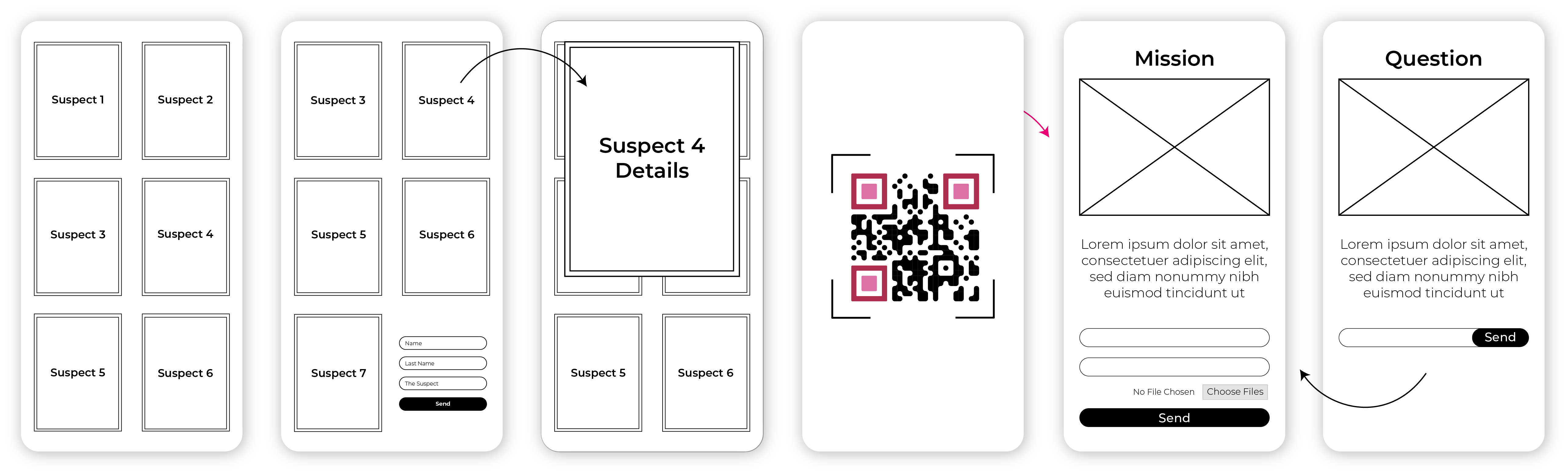
Lightweight User Experience: One of the primary challenges was creating a super light, convenient, and fast user experience for the game, considering that it would be used while the employees were “running” in the offices. This required optimizing the game’s design and functionality to ensure seamless performance on mobile devices.
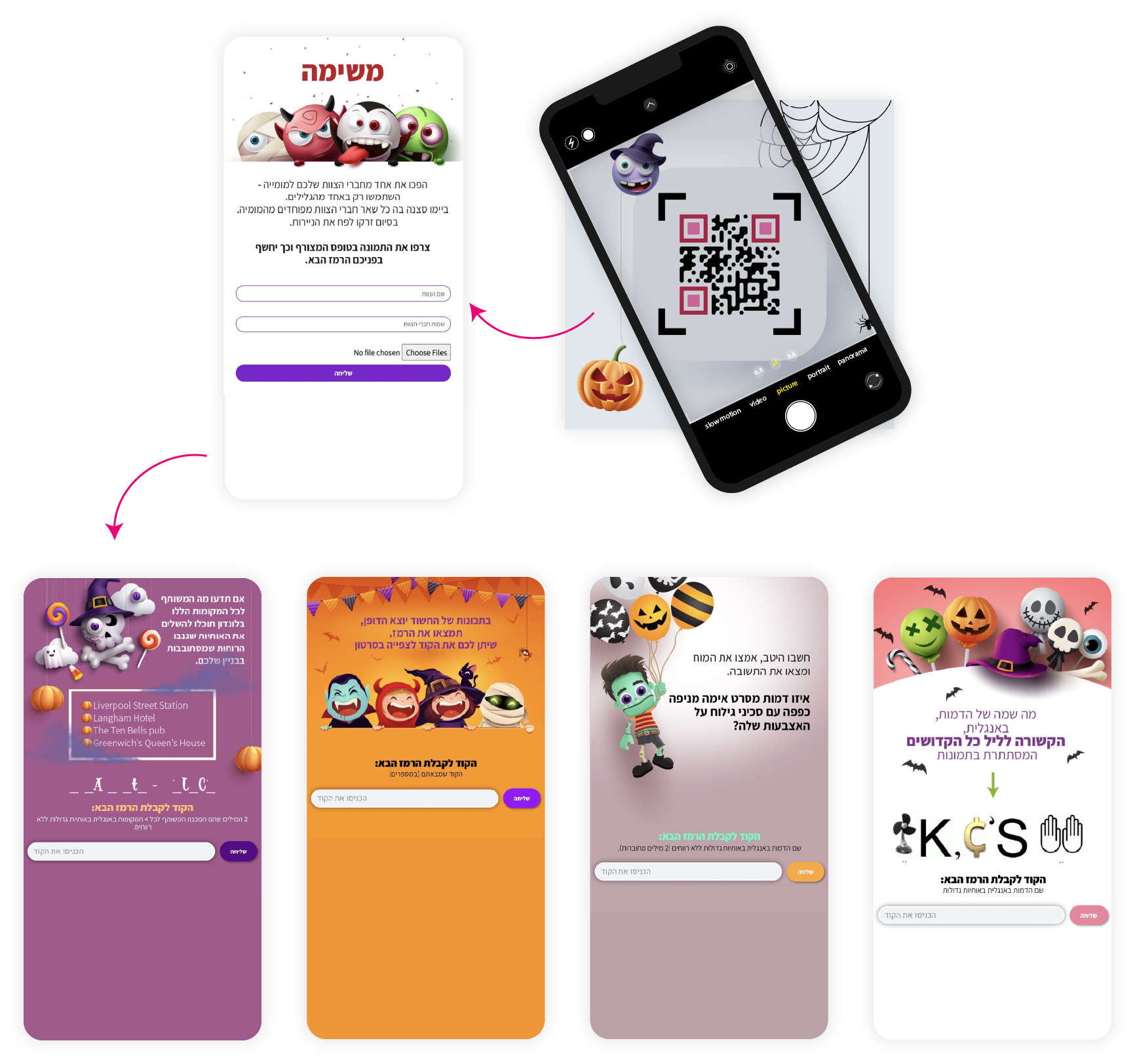
Logical Connectivity: Another challenge involved establishing logical connections between the various challenges, puzzles, and games within the mobile app. The incorporation of QR Code scans, response mechanisms within the interface, and quick file uploads demanded careful planning to maintain a coherent and engaging user experience.
Time Constraints: Time was a major constraint in this project. With the goal of initiating the project within a month, there was a tight schedule for the think tank, content preparation, design, and user experience characterization. Meeting this deadline required efficient project management and the ability to work collaboratively under pressure.
Despite these challenges, the team successfully tackled the project by prioritizing efficiency, creativity, and effective communication. The result was a well-crafted and engaging interactive mobile game that fostered connections and excitement among the company’s employees during their return to the offices.
The Solutions
User-Friendly UX: To address the challenge of allowing employees to play the game while on the move in the offices, we focused on creating a super easy and user-friendly experience. We designed the game with a “one-frame” approach for each challenge, ensuring that users could quickly interact with the game without facing any complications.
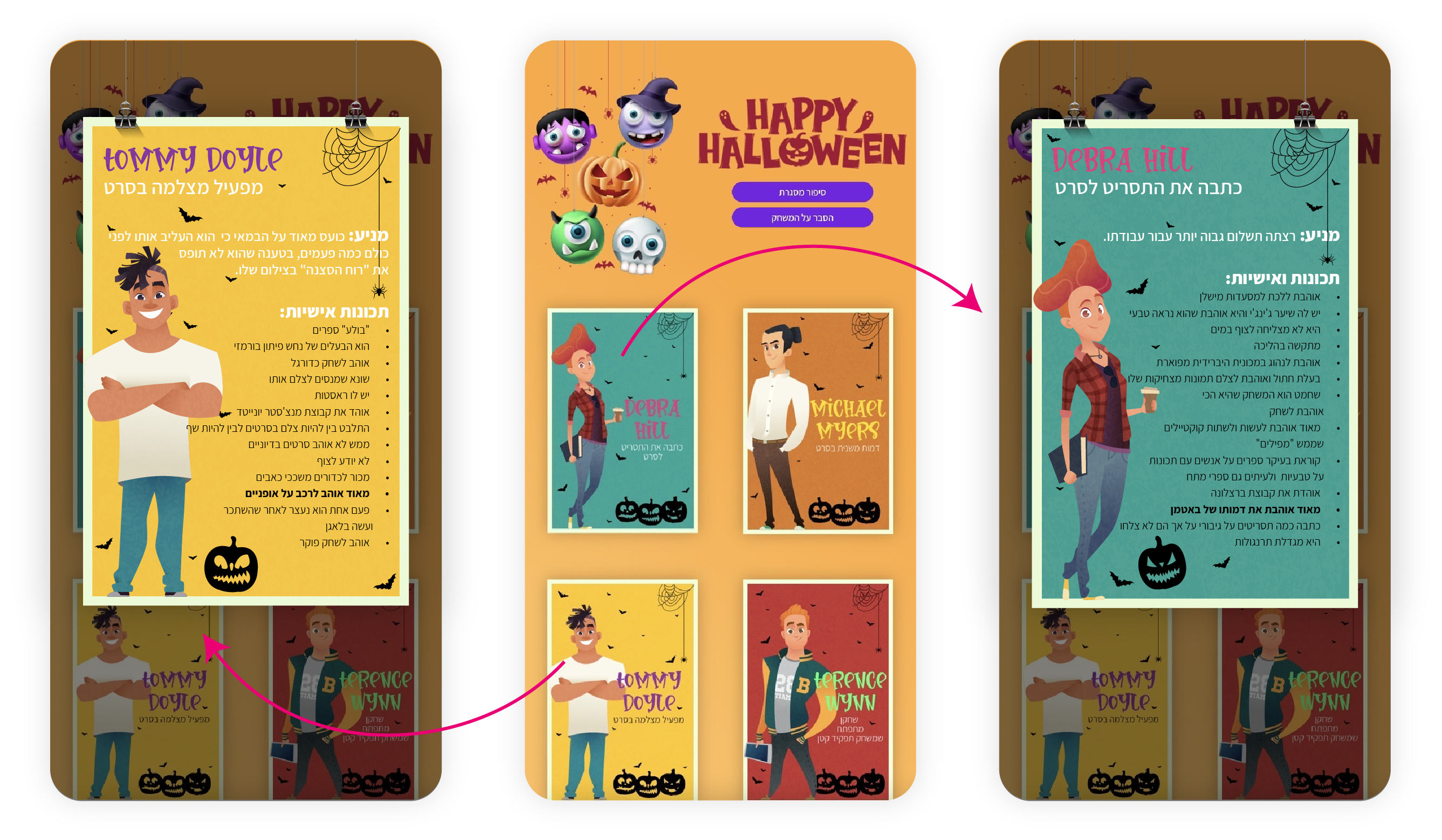
Special Main Page: We crafted a dedicated main page for the game, which served as a central hub for accessing different challenges and information. This main page was designed to be intuitive and visually appealing, providing a seamless entry point for the participants.
Pop-Up Clues: To overcome the hurdle of conveying essential details for the challenges in a simple manner, we implemented Pop-Up clues. Each Pop-Up contained all the necessary information and hints for the respective challenge, ensuring that employees had access to the guidance they needed without any confusion.
By employing these solutions, we successfully created an interactive mobile game that allowed employees to enjoy a smooth and engaging experience while “running” in the offices. The straightforward design, user-friendly features, and clear guidance through Pop-Up clues contributed to the overall success of the game, promoting collaboration and camaraderie among the participants. Despite the tight timeline, the team’s dedication and ingenuity led to the timely completion of the project, meeting the goal of initiating the game within a month.
The use of the game
Deliverables Management: One of the significant challenges in the development of the interface and challenges was to effectively communicate to the end users how to send deliverables as a team. This involved explaining the process of submitting deliverables, identifying which team member was responsible for submitting, how to do it, and the deadline for submission. Ensuring clear instructions and a seamless workflow were crucial to overcoming this challenge.
Team Collaboration: Encouraging effective team collaboration was another aspect that needed to be addressed. The game needed to facilitate seamless communication and coordination among team members while completing challenges. Ensuring that all participants were actively engaged and collaborated smoothly was vital to the game’s success.
Project Success
Despite the challenges, the project achieved remarkable success with over 1000 users participating in two different game sessions. The interface and various functionalities, including QR code scanning, challenge submission, and task completion, worked flawlessly without any reported faults.
The success of the project can be attributed to the team’s dedication, thoughtful design, and efficient communication. By creating a user-friendly interface, providing clear instructions, and promoting effective team collaboration, the game achieved its objective of fostering connections and a sense of community among the company’s employees during their return to the offices.
The positive outcome and seamless execution of the game validated the team’s efforts, showcasing their ability to deliver a successful project even under time constraints and complex requirements.